


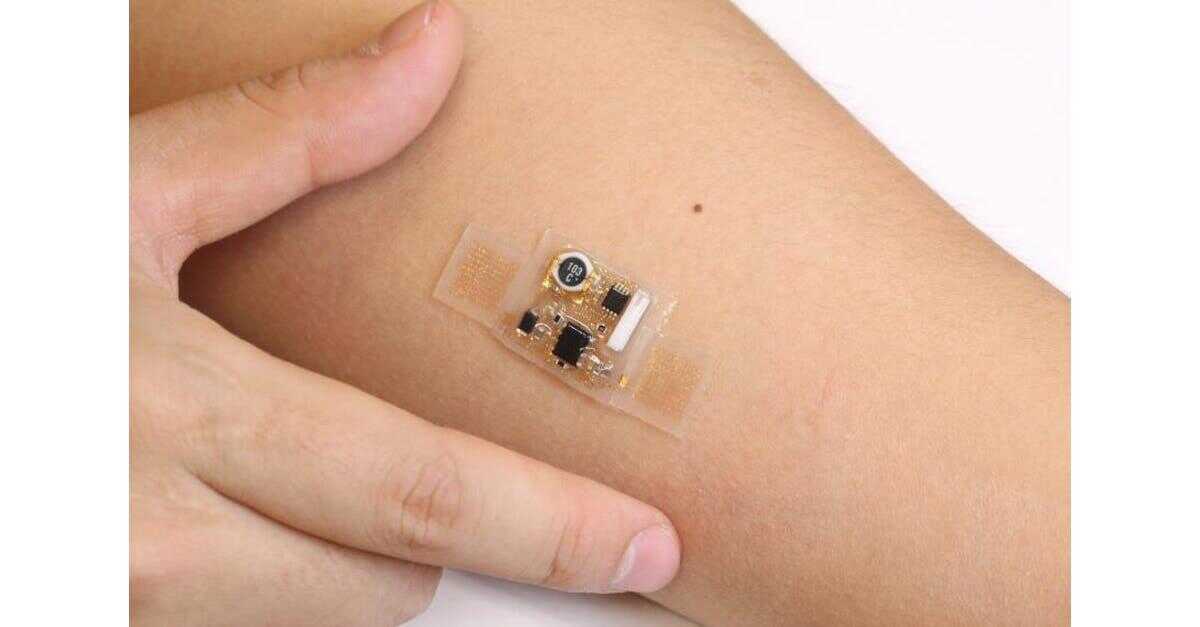

Scientists have been at work to produce a new generation of ultra-thin wearable sensors that monitor brain activity and vital health indicators without the slightest trace, indicating the next big leap in personalized healthcare technology. These skin-attachable electronically flexible devices can do the job continuously yet do not hurt nor are they heavy, as is the case with regular medical gear.
Health tech gadgets, for instance, have been in a whirlwind of development over the ten years past, going from being solely fitness trackers to complex medical tools having an ability to collect physiological data. The recent invisible sensors add further weight to the argument of why they are an important step forward as they medical-grade features are combined with their lightness, comfort and practically being indetectable during the user’s daily activities.
Conventional medical sensors, Then again, tend to be attached to gels or wires and So are heavy and cumbersome. These cutting-edge sensing equipment But have been designed with a special stretchable material that allows them to adapt to the changing shape of the skin very well. Really these sensors only come in the form of a few nanometres-thick makes it extremely easy for the body movements, as these sensors practically don’t restrict them, which means they could be used effectively in both clinical and home situations for prolonged monitoring.
Brai n activity monitoring, without a shadow of doubt makes up, the best use of these devices. In fact, the device will record the faintest brain generated electrical signals which in turn would allow healthcare workers and even scientists to study the human brain in a much more thorough and continuous way. These functions may support the understanding of various aspects of neuropsychology such as the study of the brain function for memory sleep mental disorders or physical illness, and even the understanding of the state and change in human health, as it will enable them to work without causing great distress or discomfort to the patient who shall be monitored over an extended period.
The wearables are also capable of tracking several other physiological parameters at the same time. It is quite likely that in the future these integrated sensors will be able to detect heart rate respiration skin temperature changes, muscle activity level, even skin hydration level or biochemical substances in the body through the technology of biosensors.
Data collection through constant monitoring is much better compared to the traditional approach of medical examinations once in a while. Health assessments made that way give only a quick glimpse of the patient’s condition whereas wearable sensors create a flow of data that can indicate patterns, early warning signals and also small physiological changes that would have gone unnoticed otherwise. Detection at an early stage makes it possible to healthcare practitioners to initiate an action before things worsen.
With a view to extracting the greatest possible value from these wearables, AI will have a huge part in it. Deep learning algorithms process an enormous amount of data coming from the sensors to find changes, spot irregularities and deliver health-specific insights. AI solutions can make a distinction between normal daily fluctuations and clinically relevant change, Because of this helping avoid unnecessary alarm calls while the doctors make more accurate diagnosis decisions.
The technology should give great impetus to telemedicine, as its major application will be in the area of the delivery of remote healthcare. Patients needing surgical recovery or having ongoing illness and those residing at remote locations will no longer require visiting hospitals regularly as they can be under constant observation even without that. Healthcare givers would obtain up-to-date secure information via the linking platform which would facilitate timely action whenever required.
These invisible sensors have been attracting a lot of attention in the field of neuroscience as well. Investigators interested in different aspects of memory, cognitive functioning, emotional response to stress and brain pathologies normally depend on very accurate measurements to the extent of being collected on a person’s behalf during their natural state of living and not just within a laboratory setup. These types of portable electronic devices with no weight attached to you permit the individuals to walk around as they would normally whereas the researchers at the same time capture an array of physiological and brain data.
In the sports world, these sophisticated sensors could help a great deal, not only with the identification and prevention of musculature, but with the improvement of overall physical wellbeing. A consistent assessment of the level of muscle fatigue, the performance of the cardiovascular system, and the indicators of recovery can all be helpful for devising training schemes for the athletes, while physical stress and injury can be detected and avoided much earlier through these sensors.