


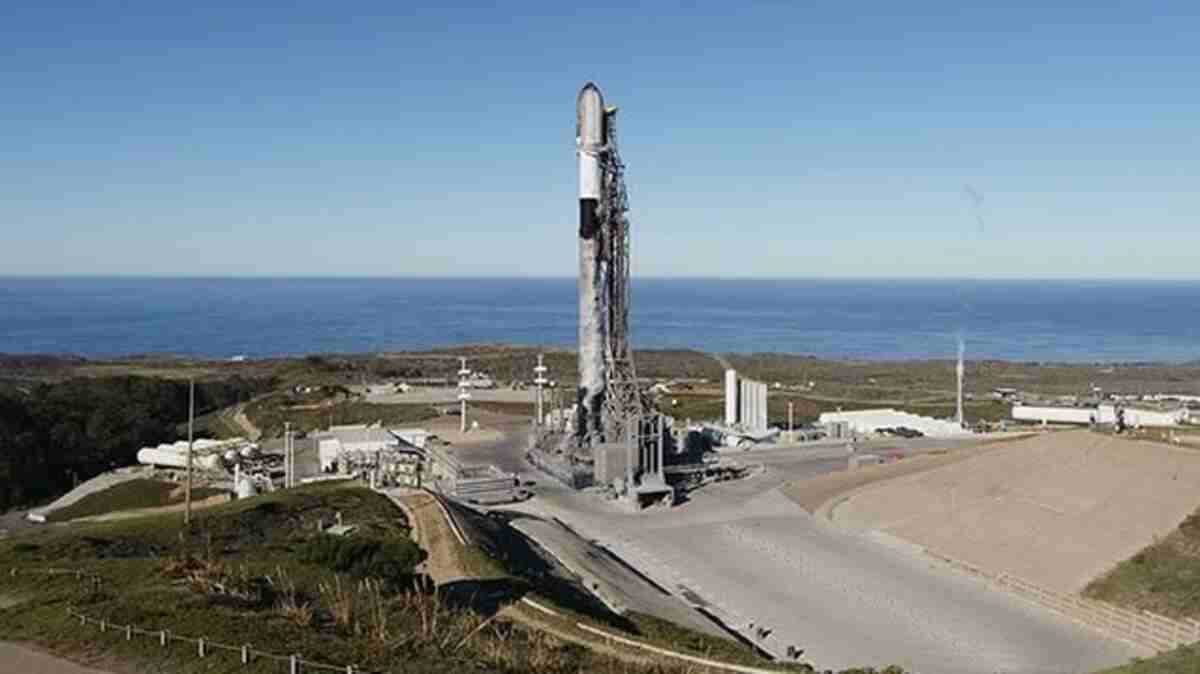

Once again, SpaceX extended its satellite internet network by successfully sending 24 Starlink satellites into orbit on a Falcon 9 rocket. This launch represents another significant step in the company’s bold plan to offer global high-speed internet via a rapidly growing group of low-Earth orbit satellites.
The rocket launched from Vandenberg Space Force Base in California, and the Falcon 9 headed into orbit without any issues. The reusable rocket fueled by the spectacle of space lovers and residents who enjoyed a bright, night sky was delivering the next generation Starlink satellites to their drop-off spots.
This flight highlighted that SpaceX had set a rather incredible pace in the Starlink project’s expansion. The satellite network project has seen the company sending up many thousands of satellites as if creating the largest satellite constellation ever. Providing worldwide top-notch broadband internet coverage not only in big cities but also in remote areas where there is no or limited traditional internet infrastructure is the Starlink system’s ultimate aim.
A critical element of the plan still is the Falcon 9 rocket. The vehicle has gained the reputation of being one of the most reliable and reusable systems and So has emerged as one of the most launched rockets globally. The features of recoverability and reusability that SpaceX has built into rocket boosters have enabled the company to heavily slash the cost of launches so that going to space can become a regular affair, facilitating the speedy deployment of large-scale space infrastructure projects.
The Falcon 9 rocket performed its task of taking the Starlink payload to a low Earth orbit without complications. The release of the satellites one by one was per the planned timeline. After the deployment phase, they will use their own propulsion mechanisms to get into their working spots gradually. These movements are done with extreme precision and are coordinated in such a way as to ensure optimized functionality of the growing constellation while at the same time keeping the risks of collisions at a minimum in the space environment which is becoming more and more congested.
Starlink is a completely new approach to delivering internet services. The ordinary satellite systems feature just a handful of satellites stationed at very high altitudes, while Starlink satellites are in huge numbers and fly very close to Earth. Thanks to this, Starlink can offer internet speeds and responsiveness rates comparable to ground-based broadband services, which was not the case with satellite internet until now.
The global need for dependable internet connectivity keeps on increasing. Besides businesses and schools, the individual users as well as healthcare providers count on fast and reliable internet for communicating learning buying and selling entertainment etc. In many cases, satellite internet may even be the only feasible solution Finally the digital divide faced by rural or otherwise difficult to reach areas.
SpaceX has been gradually bringing more and more countries into the Starlink fold, getting millions of customers. There have been quite a few cases where the system turned out to be a lifesaver, like when natural calamities disrupt everything or in maritime operations and Some say the system is In particular geared for areas without traditional broadband. Network capacity and coverage should see a marked difference with the coming of more and more satellites into service.